

The Practice of Nonviolence In Advocacy Programs
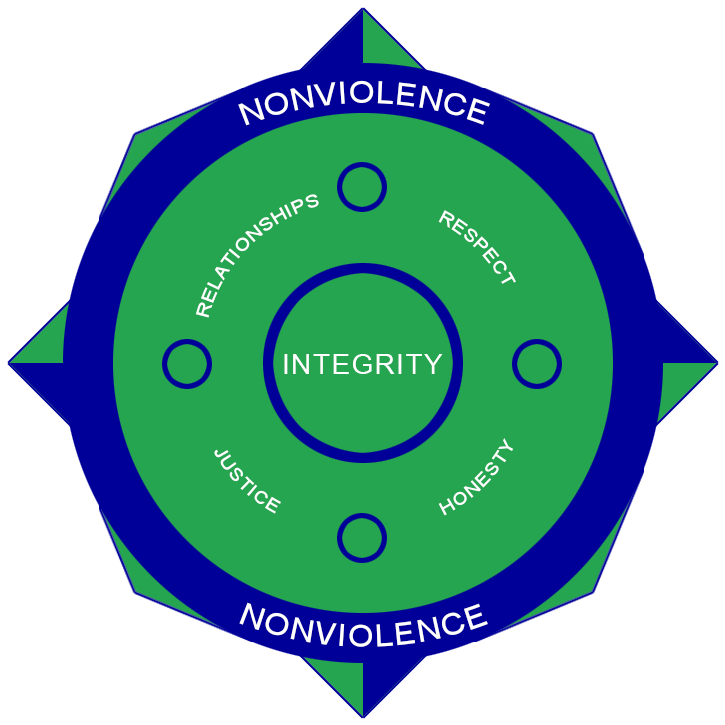 Integrity for Nonviolence® engages our efforts to integrate values promoting nonviolence: Creating respect, practicing honesty, promoting justice, and nurturing wholesome relationships. We become conscious about what we say and how we live in a way that supports, builds-up and challenges one another to be our best selves and work with caring confidence. This reverence extends to all creation.
Beginnings of Integrity for Nonviolence
There have been many participants of Integrity for Nonviolence: Diocesan staff, parishes (pastoral associates, directors of religious education, schools, parents) seminaries, religious formation; vowed religious congregations, Protestant congregations (Lutheran, Baptist, Episcopal, Methodist, Congregationalists); healthcare facilities (leadership,[general, rehabilitation] nurses [local and National Association], hospital emergency personnel), county health department, affordable housing leaders, college job training staff, Police Academy, social services, different shelters for domestic violence.
Successful advocacy efforts have been engaged to pass legislation: Domestic violence and sexual assault (Stages of Abuse, Orders of Protection, Marital Rape, HIV/AIDS (PEPFAR), Uganda Crisis Response Act, Assistance for Orphans and Other Vulnerable Children in Developing Countries Act of 2004, Promotion of Legislation for Darfur Peace and Accountability Act, Promoted $950 million to carry out commitment for G-8 deal in Scotland, Ryan White Legislation, Subsidy Northern y for seniors in Colorado, Ugandan Night Commuters, Debt Relief, agreement between McDonalds and the Immokalee Workers and environment.
IFN programs have also supported the consideration of corporate stance for nonviolence, and the proposal for one of the winners of the UN 1000 Women’s Peace Award, recipient for the Joliet Diocese Peace Award.
In the Gospel Jesus spoke about the importance of the meetings when he promised: “Where two or three are gathered together in my name, there am I in the midst of them.” (Matthew 18:20.) Meetings provide a dynamic opportunity to attend to moments of grace.
Important values that pervade the work of the advocacy group:
- Respect: The acceptance of who people are and what they bring to the cause. Look for a common language that can be shared by the group. Establish an environment that allows for the free sharing of ideas and a willingness to be changed by education.
- Honesty: Be clear that the communication will be open and truthful. The local and global concerns of HIV/AIDS demanded a committed involvement. Persons who were connected to the cause needed to sense meaning in what they were doing and to feel that they were who they were called to be because of their involvement.
- Justice: Members assumed responsibility for their commitments and were readily accountable for what they did. They also held others, such as legislators, accountable for their actions. They were prepared for conflicting positions and searched for common ground. As the members sorted through the various positions, the negotiations were fairly considered on all sides, such as that global funds were not take away from funds needed at home.
- Wholesome relationships: They looked for adequate resources necessary for ongoing education and were responsible for finding out what needed to be known. They found ways that demonstrated trust and support. This built individual and group confidence and energy.
This program is an online course that shows the practice of IFN from a Franciscan perspective and how to consciously practice  nonviolence as a facilitator in advocacy meetings. The course includes examples and history of Nonviolence, active reflections, presentations and videos on spirituality, and the core values of creating respect, practicing honesty, promoting justice, and nuturing wholesome relationships. The course requires registration and may be followed at your own pace. If you would like to register for the course, please send us a message with the Contact Form.
©2026, Integrity for Nonviolence®, all rights reserved, TERMS OF USE
Rome, Italy
Date updated: 01/22/2026
Contact Us